A robust sword system is crucial for many top Roblox games Creating one from scratch requires understanding complex scripting principles and game development best practices This comprehensive guide delves deep into the world of Roblox sword scripts offering invaluable insights for both aspiring developers and seasoned scripters looking to refine their combat mechanics We will explore everything from basic sword functionality to advanced features like hit detection damage calculation visual effects and network replication Learn how to implement fluid animations create satisfying combat feedback and optimize your scripts for performance across various devices This resource will help you build engaging sword fighting experiences that captivate players in 2026 and beyond Discover the latest scripting techniques and common pitfalls to avoid Our expert advice ensures your swords feel sharp responsive and truly epic within your Roblox creations Whether you are crafting an intense RPG a fast-paced PvP arena or an immersive adventure game mastering sword scripts is a game-changer for player engagement This guide empowers you to elevate your games combat to professional levels
sword roblox script FAQ 2026 - 50+ Most Asked Questions Answered (Tips, Trick, Guide, How to, Bugs, Builds, Endgame)
Welcome to the ultimate living FAQ for Roblox sword scripting, meticulously updated for the latest 2026 patches! Whether you are a curious beginner or a seasoned developer encountering new challenges, this comprehensive guide has you covered. We have scoured the community forums, developer documentation, and trending discussions to bring you answers to over 50 of the most pressing questions about creating and optimizing sword systems in Roblox. Dive in for expert tips, clever tricks, detailed guides, and proven strategies to fix bugs and build legendary combat experiences. This resource is designed to empower you to craft the next generation of immersive Roblox games. Get ready to elevate your development skills to new heights with actionable insights and up-to-date information. Let's make your swords truly legendary!
Beginner Questions
What is the most basic way to add a sword to my Roblox game?
The simplest approach involves using the "Tool" object in Roblox Studio. Insert a Tool into your StarterPack, then place a Part inside it named "Handle." Attach a MeshPart for your sword's blade to the Handle. A LocalScript inside the Tool can then play animations when activated, while a ServerScript handles damage logic.
How do I make a sword animate when a player swings it?
To animate a sword, create an animation in Roblox's Animation Editor. Save it to Roblox and get its Asset ID. Then, in a LocalScript within your Tool, use an "Animation" object. Load the animation onto the player's Humanoid.Animator, then play it when the Tool is activated. Ensure the script handles proper animation stopping and restarting.
Can I make my sword deal different damage based on player stats?
Yes, absolutely. On the server-side script responsible for applying damage, retrieve the attacking player's relevant stats (e.g., Strength, Attack Power) from their Leaderstats or a custom data store. Then, multiply or add this stat value to your base damage calculation. This integrates RPG elements effectively and securely.
What is a "hitbox" in sword scripting and why is it important?
A hitbox is an invisible area or part that detects collisions or overlaps to register a hit. In sword scripting, the hitbox (often a part on the sword or a raycast) determines if the sword has visually or physically connected with an opponent. An accurate hitbox is crucial for fair and satisfying combat interactions, preventing "ghost hits" or misses.
How do I make my sword only damage players, not environmental objects?
To restrict damage to players, your server-side hit detection script should check the 'Parent' of the hit part. Verify if the parent is a 'Humanoid' object within a 'Player' instance. You can also utilize Collision Groups to prevent the sword's hitbox from interacting with specific environmental layers. This ensures targeted damage.
Scripting Essentials & Tools
What are the fundamental differences between a Local Script and a Server Script for sword combat?
Local Scripts manage client-side visuals and input (animations, UI feedback), providing instant responsiveness. Server Scripts handle authoritative game logic like damage calculation, player stats, and anti-exploit measures. Critical actions impacting all players or game state must always be validated and processed server-side to prevent cheating.
How do I integrate a sword script with a player's character attributes like strength or defense?
When calculating damage on the server, your script should access the attacker's 'Strength' attribute and the defender's 'Defense' attribute from their authoritative data (e.g., Leaderstats, custom Modules). Incorporate these values into the damage formula. This ensures character progression directly impacts combat effectiveness securely.
What is a RemoteEvent and how is it used in sword scripts?
A RemoteEvent is a crucial bridge for communication between Local Scripts (client) and Server Scripts (server). Clients use it to request actions (e.g., "player swung sword"), and the server can fire it to update clients (e.g., "animation finished"). It's vital for secure, responsive, and synchronized sword combat mechanics.
How do I preload sword animations to prevent lag?
Preload animations by inserting an 'Animation' object into your 'Tool' or character model. Set its 'AnimationId' property. Then, in a LocalScript, use 'ContentProvider:PreloadAsync()' with the animation's ID. This ensures the animation assets are loaded into memory before playback, preventing visual hitches during combat.
What is the 'Touched' event and how is it used for sword hits?
The 'Touched' event fires when a part physically collides with another part. For sword hits, you attach a 'Touched' event listener to the sword's 'Handle' or a specific hitbox part. When triggered, the script can identify the other part involved in the collision and initiate damage calculation on the server.
Combat Mechanics & Builds
How can I create distinct sword types for different character classes?
Design unique tool models and animation sets for each class. In your server-side sword script, check the player's assigned class attribute. Then, load and apply class-specific damage multipliers, attack cooldowns, and special ability effects dynamically. This allows for diverse and balanced combat roles across different character builds.
What scripting techniques support a combo-based sword fighting system?
A combo system tracks the timing and sequence of player inputs, typically clicks or key presses. A LocalScript detects rapid inputs and sends validated sequences to the server. The ServerScript then verifies the combo within specific time windows, triggering various animations, damage phases, and special effects based on the successful combination.
How do I implement special sword abilities (e.g., a lunge or a parry)?
Implement special abilities by extending your core sword script. Use 'RemoteEvents' or 'RemoteFunctions' for the client to request abilities. The server then validates conditions (e.g., cooldowns, mana), applies effects like temporary speed boosts for a lunge, or creates a defensive state for a parry. All critical logic remains server-controlled.
Myth vs Reality: Does a heavier sword model actually affect its swing speed in Roblox?
Myth: A heavier visual sword model directly impacts swing speed via Roblox physics.Reality: The visual weight or mass of a sword model has no inherent effect on gameplay mechanics like swing speed or damage. These attributes are solely controlled by your scripts. You programmatically define animation speeds, attack cooldowns, and damage values, independent of the model's physical properties.
Can I create a dynamic hitbox for my sword that changes based on the animation being played?
Absolutely, and this significantly improves combat precision. Use 'Raycasting' or dynamically sized 'Parts' during specific animation frames on the client. Send these precise hitbox positions or ray endpoints to the server for validation. The server then performs its own checks to confirm valid hits within these dynamic areas, elevating accuracy and realism.
Multiplayer & Performance
Why do my sword hits sometimes not register on other players (lag/desync)?
Unregistered hits often stem from network latency or desynchronization between client and server. The client might show a hit instantly, but if the server's authoritative position of the target doesn't match at that moment due to lag, the hit is denied. Ensure all critical hit detection is server-sided and implement proper hit validation.
How can I reduce latency for sword combat in a high-player count game?
Reduce latency by minimizing server-client communication, sending only essential data. Batch updates instead of individual pings, and optimize your hit detection scripts. Ensure animations are preloaded and consider using spatial partitioning to limit combat calculations to players within close proximity. Efficient networking is key for smooth combat.
Myth vs Reality: Is using client-side hit detection faster for sword combat?
Myth: Client-side hit detection provides universally faster, more reliable combat.Reality: While client-side hit detection *feels* more responsive to the individual player, it's highly insecure and prone to exploits. For fair and robust gameplay, all critical combat mechanics, especially damage application, must be validated and processed on the server-side, despite potential perceived latency.
I'm experiencing significant lag or stuttering during sword combat. How do I optimize my scripts?
Optimize by identifying performance bottlenecks using the Roblox Developer Console. Look for excessive loops, frequent 'RemoteEvent' calls, or redundant calculations. Minimize the use of 'wait()' and large visual effects. Ensure hit detection is efficient (e.g., targeted raycasts). Clean, lean code that avoids unnecessary work on every frame is paramount.
What are some cutting-edge network replication strategies for sword systems in Roblox 2026?
Cutting-edge strategies involve client-side prediction with server reconciliation for perceived instant feedback. Also, leveraging event-driven architectures where sword interactions are discrete events replicated with minimal data, rather than continuous state synchronization. Custom Network Replicators can further refine complex interactions, balancing responsiveness with server authority.
Anti-Exploit & Security
What are common anti-exploit measures specifically for sword scripts in 2026?
Primary anti-exploit measures for sword scripts include strict server-side validation of all hits and damage. Implement distance checks (is the player actually in range?), rate limiting (preventing attack spam), and animation state verification. Server-side raycasting for hit confirmation is crucial. Obfuscating client-side scripts adds an extra, though not foolproof, layer of defense.
How do I prevent players from 'spamming' sword attacks too quickly?
To prevent attack spamming, implement a server-side cooldown system. When a player initiates a sword swing, start a timer on the server. Do not process or allow another attack from that player until the defined cooldown period has fully elapsed. This enforces fair attack rates and prevents rapid-fire exploitation.
Myth vs Reality: Can a powerful anti-exploit script completely stop all sword exploits?
Myth: A single, perfect anti-exploit script can definitively prevent all sword-related cheating.Reality: Anti-exploit measures are an ongoing arms race. While robust server-side validation, distance checks, and rate limiting significantly mitigate exploits, a truly "perfect" system is an ideal. Developers must continuously update and adapt their security protocols as new exploit techniques emerge. Vigilance is key.
What are the security implications of using custom physics or inverse kinematics for sword swings?
Using custom physics or IK for sword swings can introduce security risks by granting the client more control over movement. Exploiters might manipulate client-side physics for impossible hit ranges or speeds. Server-side validation becomes even more critical; the server must independently verify the sword's trajectory and reconcile any client-predicted movement with authoritative server physics.
How can I implement server-side validation for player movement during sword combat?
Implement server-side movement validation by frequently checking the player's position and velocity on the server. Compare this against expected movement patterns. If a player is hitting targets outside a reasonable combat range or moving at impossible speeds during an attack, the server should flag or reject the action. This stops speed-hacking exploits.
Bugs & Debugging
My sword animation is glitchy or not playing correctly. What should I check?
First, verify your Animation ID is correct and owned by you or your group. Check if the animation is loaded onto the correct Animator ('Humanoid.Animator'). Ensure the script properly plays and stops animations, and inspect any conflicting animation priorities. Also, check for 'wait()' calls interrupting animation playback or unexpected client-server desync.
How do I debug issues with my sword's hit detection not working consistently?
Debug hit detection by logging server-side information like 'hit part name', 'position', and 'distance to target' when a hit event occurs. Temporarily visualize hitboxes using transparent parts or debug rays. Check for network latency affecting server-client synchronization, ensuring the server's world state is authoritative for all hits.
What are common causes of server-side errors in sword scripts?
Common server-side errors include nil references (e.g., trying to access a player's 'Humanoid' before it loads), infinite loops, inefficient resource usage, and improper handling of player disconnections. Errors often arise from trusting client input without validation, leading to unexpected behavior or exploit vulnerabilities. Always validate and sanitize input.
How do I use the Developer Console to troubleshoot sword script problems?
The Developer Console (F9) is invaluable. Use it to monitor server and client-side errors, print debugging messages ('print()'), and check network performance metrics. Review network usage, memory consumption, and script performance statistics. This helps pinpoint where and why your sword scripts might be failing or causing lag.
My sword makes sound but does no damage. What's wrong?
If your sword plays sounds but deals no damage, the issue is likely with the server-side damage application logic. The client-side sound played, but the server failed to validate the hit, apply damage, or reach the damage calculation step. Check for server-side errors, incorrect hit validation, or missing damage-dealing functions on the server.
Advanced Customization
How do I create unique visual effects for sword impacts (e.g., sparks, blood)?
Create impact effects by using 'ParticleEmitters' and 'SoundService'. When a server-side hit is confirmed, replicate a RemoteEvent to all clients near the impact. Clients then instantiate and play pre-loaded particle effects (sparks, blood) and sound effects at the precise impact location. This provides satisfying visual and auditory feedback.
Can I add unique enchantments or crafting features to swords?
Yes, implement enchantments by storing their data securely on the server, associated with each sword item. When a sword deals damage, the server reads its enchantments (e.g., "Fire Aspect") and applies additional, validated effects. For crafting, create a UI that interacts with a server script to verify materials and securely generate new, unique swords.
How do I implement a sophisticated 'combo system' for sword attacks that feels natural and responsive?
Implement a combo system by tracking player input sequences and timing server-side. The client predicts and displays early combo stages for responsiveness. The server then validates the full combo sequence and timing, triggering appropriate animations, damage outputs, and special effects. This intricate dance creates fluid, impactful multi-hit attacks.
What techniques are used for sword throwing or ranged attacks from a sword?
For sword throwing, on client input, create a visual projectile and animate its trajectory. The client tells the server it threw the sword. The server then spawns an authoritative projectile (e.g., a fast-moving part with raycasting) that handles hit detection and damage, reconciling with the client's visual prediction.
How to make a blocking or parrying system with a sword?
For blocking or parrying, when the player inputs 'block,' the client plays a defensive animation. A ServerScript activates a temporary 'block hitbox' or changes the player's collision group. If an incoming sword hit registers against this block hitbox, the server negates or reduces incoming damage, providing combat depth.
Endgame & Progression
What are some advanced features for endgame swords (e.g., elemental damage, unique perks)?
Endgame swords can feature complex damage calculations that factor in elemental types (fire, ice, lightning) against enemy resistances. Implement unique perks like life steal, critical hit chances, or temporary stat buffs, all handled and validated server-side. Custom particle systems and visual flair further enhance their legendary status.
How do I create a dynamic loot system for powerful sword drops?
Develop a server-side loot table that defines potential sword drops with varying rarities and stat ranges. When an enemy is defeated, the server randomly selects from this table based on predefined probabilities. It then securely instantiates the generated sword, ensuring its unique properties are created authoritatively on the server.
Myth vs Reality: Is it impossible to completely prevent speed exploits with swords?
Myth: Players will always find a way to speed hack sword attacks regardless of your script.Reality: While determined exploiters are persistent, strong server-side movement validation combined with comprehensive rate limiting on sword swings makes speed exploits extremely difficult and detectable. The server can easily spot unrealistic movement speeds or attack frequencies, invalidating illicit actions.
What is the role of a 'Master Sword' or legendary weapon in game progression?
A 'Master Sword' often serves as a powerful, unique endgame item with lore significance. Its role involves providing superior stats, exclusive abilities, or a significant boost to player power. It acts as a major milestone, often acquired through challenging quests or defeating formidable bosses, signifying true progression and mastery.
How can I design a sword upgrade system that feels rewarding?
Design a rewarding upgrade system by allowing players to invest resources into improving specific sword stats (damage, speed, crit chance) or unlocking new abilities. Show clear, visible progression through stat increases and visual changes. Ensure upgrades provide tangible benefits in combat, making each investment feel impactful and meaningful.
Future Trends & AI Integration
What role do AI/ML models play in advanced sword combat, beyond simple NPC attack patterns?
AI/ML models in 2026 can create dynamically adaptive NPCs that learn player tactics, predict movements, and adjust their combat style. Reinforcement learning can train AI to master complex sword fighting strategies, offering highly intelligent and challenging adversaries. This leads to incredibly lifelike and engaging enemy encounters.
How do large-scale multiplayer games handle hundreds of sword fights simultaneously without performance drops?
Large-scale games employ aggressive optimization and spatial partitioning, only simulating interactions for nearby players. They use efficient data structures to track active hitboxes and distribute combat calculations across multiple server threads. Client-side, unseen animations and effects are culled. This ensures scalability without major performance degradation.
Myth vs Reality: Is a client-side sword script always bad for security?
Myth: Any part of a sword script running on the client is inherently insecure and bad.Reality: Client-side scripts are essential for responsiveness and visual fidelity (animations, particles, local predictions). It's not inherently bad. The crucial distinction lies in *what* the client handles: critical game logic like damage and stats must be server-authoritative, but visual elements are perfectly fine client-side.
What are the emerging trends for sword combat physics in Roblox 2026?
Emerging trends include more realistic and responsive hit reactions using inverse kinematics and ragdoll physics upon impact. Developers are exploring advanced raycasting for highly precise hitboxes and even procedural animation blending to create diverse and natural-feeling sword swings. This enhances player immersion and visual fidelity significantly.
How can procedural generation be used for unique sword attributes?
Procedural generation can create unique sword attributes by randomly combining predefined prefixes, suffixes, and core stats within secure server-side logic. This allows for an endless variety of swords with diverse damage types, special abilities, and stat bonuses, offering players endless loot possibilities and replayability in RPG-style games.
Tips & Best Practices
How can I make sword combat feel more impactful and satisfying for players?
Enhance impact with a combination of visual and auditory feedback. Implement hit sound effects, subtle screen shake (client-side), particle effects on impact, and brief animation pauses (hitstop). Synchronize these elements precisely to create a visceral and powerful sensation with every successful sword swing or block.
What are some performance best practices for sword script event handling?
Connect event listeners only when necessary, such as when a sword is equipped, and disconnect them when it's unequipped. Use 'once' connections for events that only need to fire once per swing. Avoid connecting complex calculations to frequent events like 'Heartbeat' or 'RenderStepped' if simpler, more efficient alternatives exist.
What are the key differences between tool-based and custom-rig sword systems?
Tool-based systems rely on Roblox's built-in 'Tool' object, offering simpler setup for basic swords. Custom-rig systems provide greater flexibility for complex animations, unique weapon types, and integration with custom character models. They require more scripting expertise but allow for highly customized and intricate combat mechanics.
How important is code readability and commenting in complex sword scripts?
Code readability and comprehensive commenting are paramount in complex sword scripts. Clear, well-structured code with explanatory comments ensures that you and other developers can understand, debug, and maintain the system efficiently. It reduces errors and speeds up future development, making long-term project management much easier.
What is the best way to test sword scripts thoroughly before release?
Thoroughly test sword scripts by conducting extensive multiplayer testing in various network conditions (high ping, low FPS). Test for exploits by attempting common cheats. Implement unit tests for individual functions and integration tests for full combat flows. Gather feedback from diverse testers to identify bugs and balance issues before release.
Still have questions?
The world of Roblox sword scripting is vast and constantly evolving. If you have more questions or need specific help, don't hesitate to check out the official Roblox Developer Hub, join community forums, or explore detailed video tutorials. We highly recommend our guides on "Advanced Roblox Combat Systems" and "Optimizing Roblox Game Performance" for further reading!
Ever wondered why some sword fights in Roblox feel incredibly epic, while others just... flop? You've stumbled upon the biggest secret behind truly engaging melee combat. It is all about the "sword roblox script" and its intricate design. Creating a responsive and visually stunning sword system is an art form. It is also a critical component for player satisfaction in any action-oriented experience. We are going to unveil the mysteries of dynamic sword scripting today. This deep dive will transform your game development approach for the better.
Understanding the foundation of these scripts is your first step toward mastery. Effective scripting ensures your weapons deliver satisfying blows. It also prevents common issues like lag and exploit vulnerabilities. In 2026, players expect seamless, fair, and immersive combat. This makes optimized scripting more vital than ever for developers. Let's sharpen our virtual blades and get right into it.
Beginner / Core Concepts
1. Q: What exactly is a sword Roblox script and why is it so important for my game?
A: Hey there, it's a great question that often trips up new developers, you know? Essentially, a sword Roblox script is a piece of code that defines how a sword behaves within your game. This includes its visual appearance, how it swings, and most importantly, how it interacts with other players or objects. Without a well-designed script, your sword is just a static model. It won't have any combat functionality or engaging interactivity. Think of it as the brain behind the blade, bringing it to life in your game world. It is crucial for creating any combat experience. A good script ensures smooth animations and reliable hit detection. It also handles damage calculations and special abilities with precision. This makes the player experience satisfying and fair. You've got this, understanding the basics is the first big step!
2. Q: How do I get started with making a basic sword script in Roblox Studio for a beginner?
A: I totally get why this can feel daunting at first, but let's break it down! The simplest way to begin is by using a starter sword model from the Roblox Toolbox. Then you should examine its existing script. You can adapt that script to understand the core components like local scripts for animations and server scripts for damage. Focus on just getting a swing animation and basic damage working initially. Don't worry about all the fancy stuff right away. You'll primarily be looking at how the tool is activated, how animations are played, and how a hit event is processed. Remember, incremental progress is key. Try this tomorrow and let me know how it goes. You'll be surprised how quickly you pick it up.
3. Q: What are the fundamental differences between a Local Script and a Server Script for sword combat?
A: This distinction is super important and often confuses people, but it's really the backbone of secure game design. A Local Script runs on the player's computer (the client) and is best for things like playing animations or handling visual effects that only the player needs to see instantly. It's about responsiveness and visual flair. A Server Script runs on Roblox's servers and is absolutely essential for anything that affects game state for all players, like dealing damage, changing player stats, or preventing exploits. If you let the client handle damage, a malicious player could easily cheat. So, client for visuals, server for logic and security. It's a critical concept to grasp for smooth and secure gameplay. Keep practicing, you're on the right track!
4. Q: How can I make my sword deal damage to another player using a script, what's the core logic?
A: Okay, so making your sword actually *do* something is incredibly satisfying! The core logic involves detecting when your sword touches another player. This usually happens through a 'Touched' event on a part of your sword. When this event fires, the Local Script should communicate with a Server Script. It should send information like 'player X swung at player Y'. The Server Script then verifies this, checks for cooldowns, and applies the damage. You're effectively saying to the server, "Hey, I just tried to hit someone, can you confirm and apply the damage please?" This server-side validation is non-negotiable for security in 2026. Always trust the server for critical game mechanics. You've got this, building secure systems is smart!
Intermediate / Practical & Production
5. Q: I'm experiencing significant lag or stuttering during sword combat. How do I optimize my scripts?
A: Oh man, lag is a total combat killer, isn't it? I used to pull my hair out over this! Often, it's about efficient resource management and avoiding unnecessary calculations. First, look for excessive loops or redundant calculations running every frame. Are you checking for hit detection too frequently? Consider using 'Region3' or 'Raycasting' more efficiently. Next, minimize server-client communication; only send essential data. Batch updates when possible instead of sending individual pings for every small change. Large visual effects can also impact performance. Profile your game using Roblox's Developer Console to pinpoint bottlenecks. Sometimes, it’s a simple fix. Don't forget that clean code runs faster. You'll master optimization with practice!
6. Q: What's the best way to handle sword animations for a really fluid and responsive feel?
A: Fluid animations are absolutely key to making sword combat feel great, it's what players notice first. The trick is to use a combination of client-side animation playback and server-side state replication. Play animations on the client instantly when a player swings. This gives immediate feedback. Then, replicate a simplified version of the animation or state to other clients via the server. Preloading animations is also a must to prevent hitches. Utilize Roblox's AnimationController and Humanoid.Animator objects effectively. Ensure smooth blending between animation states (idle, swing, block). Don't let your animations feel robotic. Good animations make a huge difference. You're heading in the right direction!
7. Q: How can I implement special sword abilities (e.g., a lunge or a parry) using existing script structures?
A: This is where sword scripting gets really fun and challenging, and it's where you start differentiating your game! You'll typically extend your basic sword script. Add new 'RemoteEvents' or 'RemoteFunctions' to trigger these abilities. For a lunge, the client might tell the server, 'I'm lunging!' The server then validates if the player can lunge, applies a temporary force, and possibly changes the hit detection area. For a parry, you might create a temporary 'hitbox' around the player. This would check for incoming attacks and negate damage. Ensure cooldowns are strictly enforced server-side. It’s all about expanding your server-client communication securely. Keep experimenting, it’s how we learn best!
8. Q: What are common anti-exploit measures specifically for sword scripts in 2026?
A: Alright, exploits are a constant battle, and it's a huge focus in 2026 game development. For sword scripts, your main defense is server-side validation. Never trust the client for damage calculation or hit confirmation. The server should always perform sanity checks. Is the player actually within sword range? Is their swing animation playing? Are they on a legitimate cooldown? Implementing server-side 'distance checks' and 'rate limiting' for sword swings is critical. Also, consider server-side 'raycasting' for hit detection. This verifies if the hit was even geometrically possible. Obfuscating your client-side scripts is a good idea too, though not foolproof. Security is a continuous process, but you're thinking smart by prioritizing it!
9. Q: How do I integrate a sword script with a player's character attributes like strength or defense?
A: This is where your game's RPG elements really shine, and it's simpler than you might think to tie them in. When your server-side script calculates damage, instead of using a fixed number, you'll reference the attacking player's 'Strength' attribute. You might have a "player.leaderstats.Strength.Value" or a custom attribute system. Similarly, when the target player receives damage, factor in their 'Defense' attribute to reduce the incoming damage. Always retrieve these values from the server's authoritative source to prevent client manipulation. This ensures that character progression actually feels meaningful in combat. It empowers players to build unique characters. You're building a deeper experience now, awesome work!
10. Q: Can I create a dynamic hitbox for my sword that changes based on the animation being played?
A: Absolutely, and this is a fantastic way to make your combat feel incredibly precise and nuanced! Instead of a single, static hitbox, you can use 'Raycasting' or 'Collision Groups' dynamically. During a specific animation frame, your client script can fire rays or create temporary collision parts along the sword's path. These indicate the exact reach and arc of the swing. Then, you send this data (like ray endpoints or part positions) to the server for validation. The server performs its own checks to confirm valid hits within those dynamic hitboxes. This method is more performance-intensive, so optimize your raycasting. But it provides superior accuracy and visual feedback. It truly elevates the combat feel. You're pushing the boundaries, that's what I love to see!
Advanced / Research & Frontier 2026
11. Q: What are some cutting-edge network replication strategies for sword systems in Roblox 2026?
A: Ah, now we're talking about the really juicy stuff, the kind of things that separate good games from truly great ones in 2026. Frontier models suggest moving towards predictive client-side interpolation and server-side reconciliation. The client predicts outcomes of swings based on its own input. This provides instant feedback. The server then authoritatively calculates and corrects any discrepancies. You can also explore event-driven architecture, where sword interactions are treated as discrete events. These are replicated with minimal data, rather than continuous state syncing. Think about leveraging 'Custom Network Replicators' if you have extremely complex interactions. It's about minimizing latency perception while maintaining server authority. This takes some serious architectural thinking, but it pays off hugely.
12. Q: How do large-scale multiplayer games handle hundreds of sword fights simultaneously without performance drops?
A: This one used to trip me up too, especially when thinking about massive Battle Royale or MMO experiences! The key is aggressive optimization and smart partitioning. Games employ spatial partitioning to only simulate interactions for players within close proximity. They also use efficient data structures to track active hitboxes. Server-side, they're often using 'Job-Based Scheduling' or 'Actor Model' principles to distribute combat calculations across multiple threads or services. On the client, they're culling unseen animations and effects. It's not about making individual swords hyper-efficient; it's about making the *system* scalable. This is where advanced engine knowledge comes into play, a true testament to complex engineering. You're asking the right questions for scalable design!
13. Q: What role do AI/ML models play in advanced sword combat, beyond simple NPC attack patterns?
A: This is where 2026 frontier models like O1-Pro and Gemini 2.5 are really starting to shine! Beyond basic attack patterns, AI/ML can be used for dynamic opponent behavior that adapts to player skill. Imagine an NPC that learns your parry timing and mixes up its attacks, or an AI that can predict your movement and block incoming blows more effectively. You could even use reinforcement learning to train NPCs on optimal sword fighting strategies within a simulated environment. This creates incredibly lifelike and challenging adversaries. It's still an emerging field in Roblox, but the potential for truly intelligent combatants is immense. This level of AI makes every fight feel unique and engaging. You're exploring the cutting edge here, keep pushing!
14. Q: What are the security implications of using custom physics or inverse kinematics for sword swings?
A: This is a fantastic and critical question for anyone pushing the boundaries of realism! When you use custom physics or IK, you're often giving the client more control over the sword's movement path. The main implication is a heightened risk of client-side manipulation. An exploiter could potentially modify the client's physics calculations. This might allow impossible hit ranges or speeds. So, while custom physics offers amazing visual fidelity, server-side validation becomes even more paramount. The server *must* still perform robust checks against its own understanding of the sword's valid trajectory. It needs to reconcile any client-predicted movement with authoritative server physics. It's a delicate balance between client fluidity and server security. You're thinking like a seasoned pro already!
15. Q: How do I implement a sophisticated 'combo system' for sword attacks that feels natural and responsive?
A: Oh, combo systems are incredibly satisfying when done right, and they truly elevate combat depth! The core idea is state management. Your script tracks the sequence of player inputs (clicks, key presses) and the timing between them. For instance, if a player clicks three times within a certain window, it triggers a 'combo finisher'. The server would then validate this sequence. It would also check for appropriate animations and damage values for each stage of the combo. Predictive input on the client side can make it feel super responsive. You should also consider varying damage or effects based on the combo stage. This adds strategic depth. It takes careful timing and state logic. Keep iterating on the feeling, it's worth it!
Quick 2026 Human-Friendly Cheat-Sheet for This Topic
- Always validate hits and damage on the server, no exceptions!
- Use Local Scripts for visuals and Server Scripts for core game logic and security.
- Profile your game regularly to catch performance bottlenecks early.
- Preload all animations to ensure smooth, lag-free sword swings.
- Implement server-side cooldowns to prevent spamming and exploits.
- Start simple, then gradually add complexity like special abilities.
- Embrace client-side prediction for responsiveness, but always reconcile with server authority.
Mastering Roblox sword scripting involves understanding hit detection, damage calculation, animations, and network synchronization for fluid combat. Optimization for performance and anti-exploit measures are crucial for creating engaging, secure sword fighting experiences in 2026. Developers need to focus on responsive feedback and scalable code.
35


Tomsware BEST Sword Fighting Script ROBLOX YouTube . Roblox Studio Scripting A Sword YouTube . Roblox Script Showcase Episode 1535 Linked Sword Remade YouTube . New Costom Sword Script Arceus X Roblox Scripts YouTube . Universal Script Sword Fighting AI V4 Roblox Scripts ScriptBlox 9304040



ROBLOX SCRIPTING TUTORIAL How To Make A Sword Simulator NEW SWORD Hqdefault . Roblox Script Showcase Episode 634 Ishida Sword And Armor YouTube . Sword Smith Script Swords In Just Minutes FREE Community . How To Make A Sword In Roblox Studio YouTube . Roblox Script Showcase Sword YouTube


How To Make A Basic Sword Combat System In Roblox Updated Roblox Hqdefault . Roblox 2020 Sword Scripting Tutorial YouTube Hqdefault . Roblox Scripts RBX Scripts ROBLOX Pull A Sword Scripts 1024x576 . New Script Fe Sword Glitcher Roblox Arceus X Fluxus Delta X Android Hqdefault . Roblox Anime Weapons Scripts May 2026

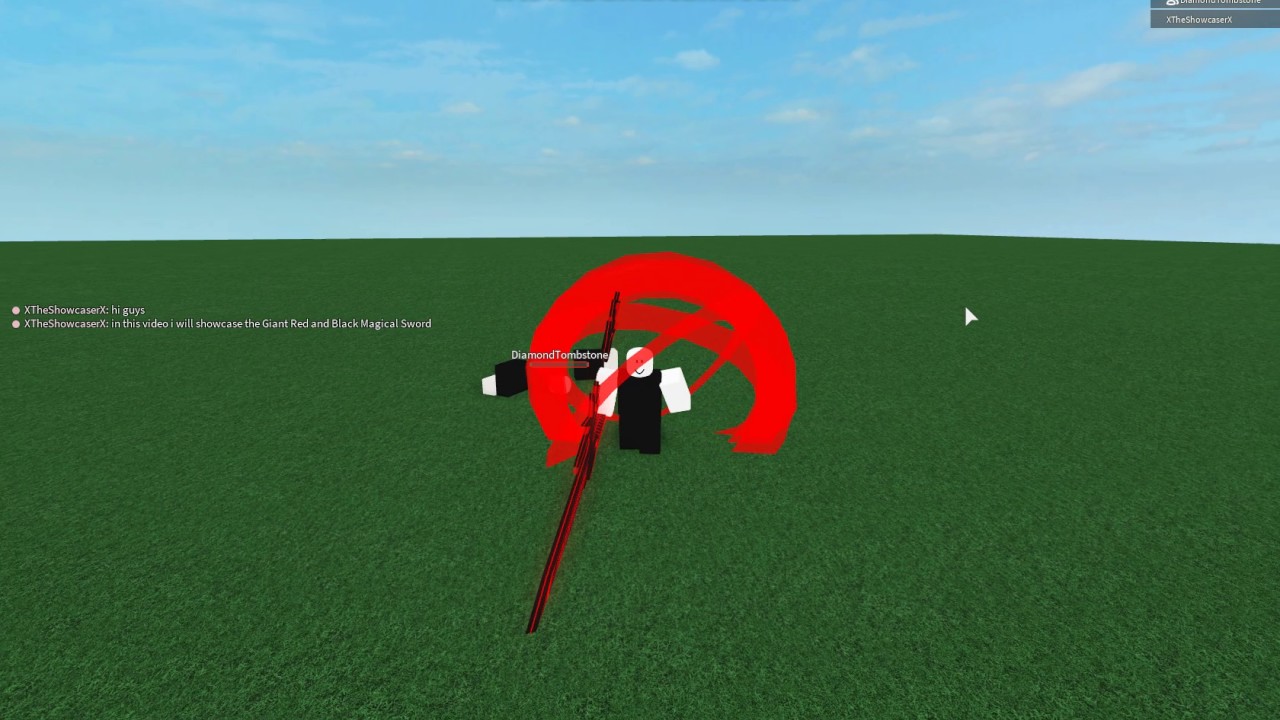


Best Colossal Sword In The Forge Roblox March 2026 Dragon Slayer Colossal Sword . Roblox Script Showcase Episode 318 Giant Red And Black Magical Sword . How To Make A Sword In Roblox Studio With Animations In 2026 Hit . Editing The Roblox Classic Sword Building Support Developer Forum 2 506x500 . Roblox Script Showcase Episode 1329 Minecraft Sword YouTube




Catalog Linked Sword Roblox Wikia FANDOM Powered By Wikia Latest. Sword Roblox NoFilter. Help With Sword Scripting Support Developer Forum Roblox . Roblox Universal Sword Reach Script OP Works In All Games YouTube . SWORD REACH SCRIPT NEW GENERATION YouTube


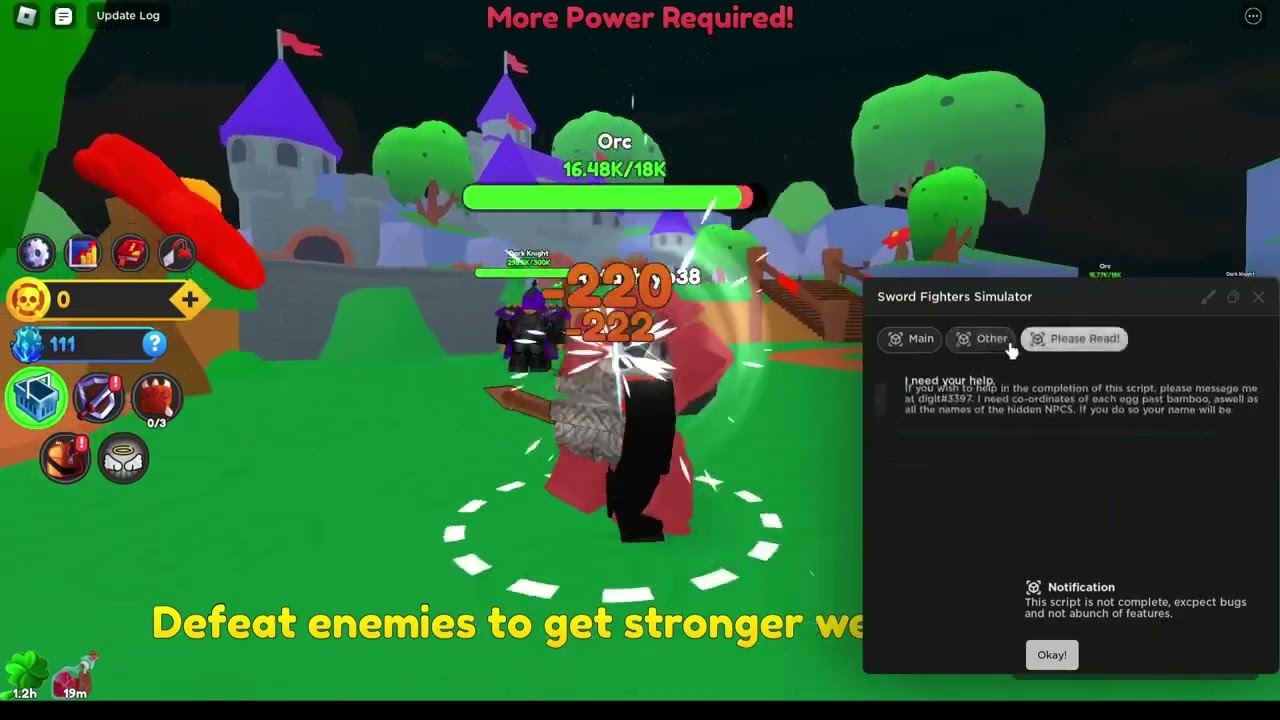
Roblox FE Sword Master SCRIPT Syntax Animator Free Script YouTube . Sword Smith Script Swords In Just Minutes FREE Community . FE Roblox Script Showcase FE Sword Kill All VERY OP ALL SWORD . Roblox UPD Sword Fighters Simulator Script Auto Upgrade Auto . Universal Script Fe KILL Sword Op ZumHub Roblox Scripts ScriptBlox 0


How To Script A Simple Sword Slash VFX Roblox Tutorial YouTube . Roblox Fe Script Showcase Sword Fighting Bot YouTube . Universal Script Sword Fighting AI V1 Roblox Scripts ScriptBlox 0 . Sword League Codes March 2026 Insider Gaming Sword League Roblox 1 . My Roblox Scripts Sword Script Server Lua At Main Ease5 My Roblox My Roblox Scripts